Importing food from third countries is not merely a matter of customs duties and labelling. When a product's composition includes raw materials of animal origin — fish oil, fish collagen, gelatine, crustaceans, dairy or meat — an entirely different legal regime applies. A regime that, in practice, determines whether the goods can enter EU territory at all.
Two Product Categories — A Critical Distinction
EU law draws a fundamental distinction between two groups:
Products of animal origin (POAO) — products in which animal-derived ingredients constitute a substantial part, or which are classified as such (e.g. fish oils, fish collagen, gelatine, dairy products).
Composite products — products containing both plant-based ingredients and processed products of animal origin. A classic example is a food supplement in a gelatine capsule containing fish oil and plant extracts.
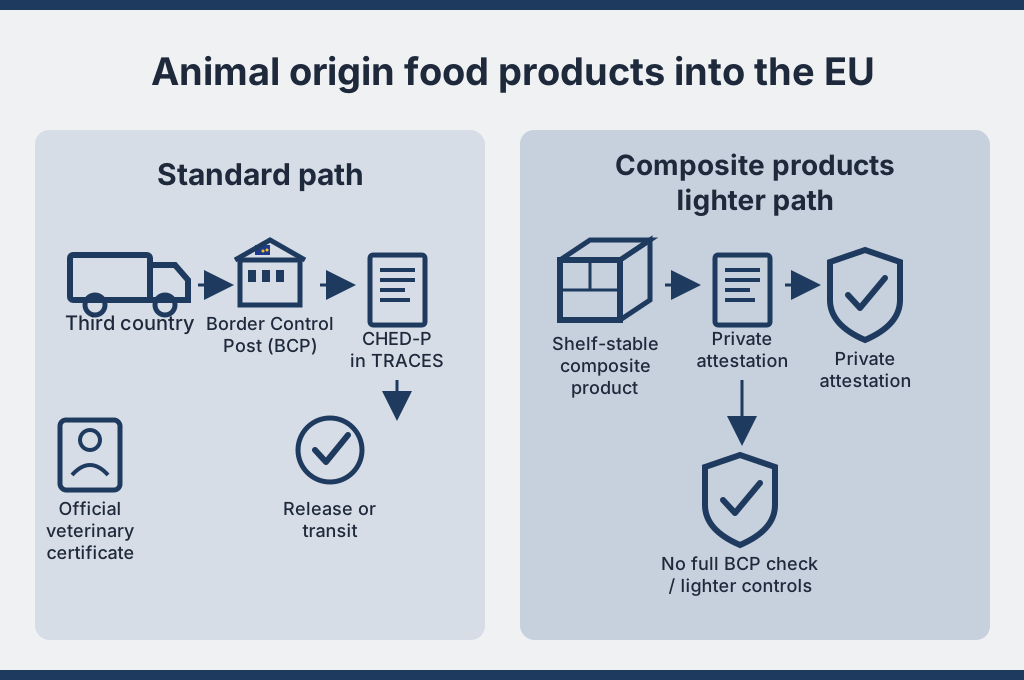
The Standard Route: Border Control Post + CHED-P
For products of animal origin and the majority of composite products, the full procedure applies:
- The goods must originate from an establishment approved for export to the EU (the list of approved establishments is published by the European Commission).
- The consignment must be accompanied by an official veterinary certificate issued by the competent authority of the third country.
- The consignment must be notified in the TRACES system via a CHED-P document (Common Health Entry Document – Products).
- The goods must enter EU territory through a designated Border Control Post (BCP).
- At the BCP, a documentary check is carried out, and where necessary, an identity check and physical check are also performed.
Only after a satisfactory outcome of the checks may the goods be released for free circulation or directed for onward transport under customs supervision (transit).
The Lighter Route — Low-Risk Composite Products
Under Commission Delegated Regulation (EU) 2021/630, certain composite products may be exempt from the requirement to undergo checks at a Border Control Post. However, the conditions are strict:
- The product must be shelf-stable at ambient temperature
- It must not contain processed meat
- The proportion of processed products of animal origin must be sufficiently low
- The product must fall within the catalogue of exempt categories
In such cases, instead of a full official certificate and BCP checks, a private attestation by the importer is sufficient. Checks may subsequently be carried out at the destination or at the importer's warehouse.
Transit Through EU Territory
The mere fact that goods are ultimately destined to leave the EU (e.g. to be transported to Ukraine or Belarus) does not exempt them from the obligation to complete the necessary formalities upon entry into EU territory. For transit of products of animal origin, or composite products that do not meet the conditions for exemption, the same logic applies:
- Entry through a designated BCP
- CHED-P notification in the TRACES system
- Veterinary checks
- Onward transport in sealed vehicles under customs supervision
- Exit from the EU through a designated point
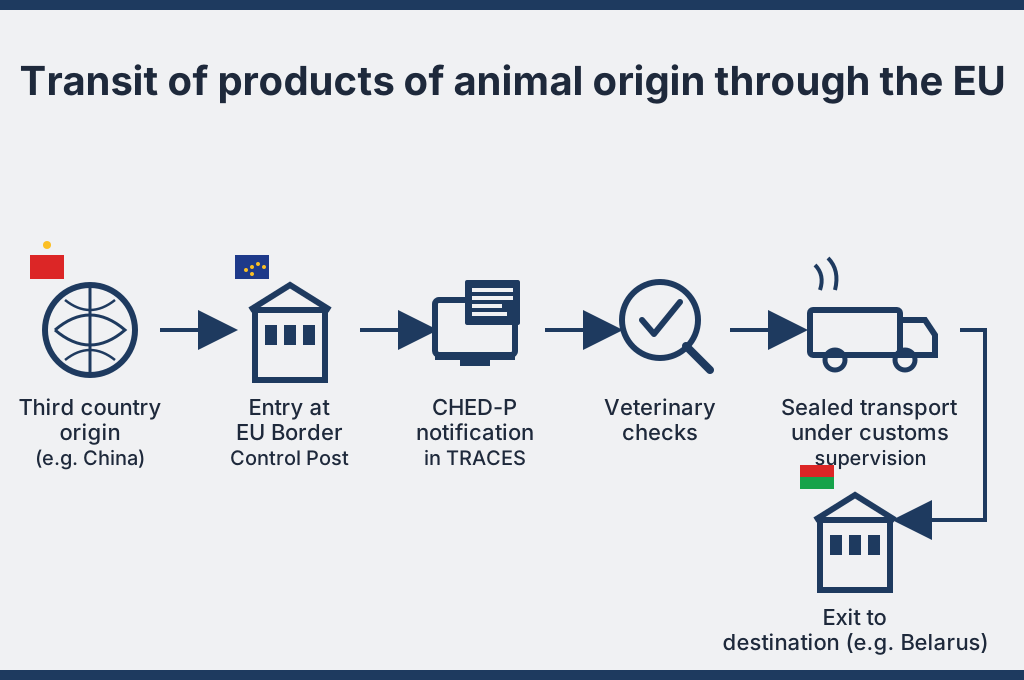
There is no general exemption from the CHED-P requirement simply because the goods are "passing through". Exceptions exist, but they are narrow and depend on the specific composition of the product.
What This Means in Practice
For importers and distributors, there are three key takeaways:
- Composition determines the route. Even a minor change in the proportion of an animal-derived ingredient can shift a product from one category to another.
- The establishment must be approved. If an establishment does not appear on the EU list, lawful import is impossible, regardless of the product's quality.
- Transit is not "easier". In many cases, the formalities for transit are virtually identical to those for placing goods on the EU market.
Summary
The import and transit of food of animal origin from third countries is an area where the details of composition and documentation have a direct bearing on whether goods can physically be moved. The standard route (BCP + CHED-P) is the rule. The lighter private attestation mechanism exists, but it applies only to a narrow category of composite products that meet specific conditions.
The first step for any product portfolio containing animal-derived ingredients should be to determine precisely which route a given product must follow — before logistics and delivery schedules are planned.
Do you need assistance with the import or transit of products of animal origin?
Frequently Asked Questions
Does transit through the EU exempt goods from border controls?
No. Entry into EU territory — even for transit purposes — requires passage through a designated BCP, submission of a CHED-P notification in TRACES, and veterinary checks. Onward transport takes place under customs supervision.
What is the difference between a POAO and a composite product?
A POAO is a product in which animal-derived ingredients predominate (fish oil, collagen, gelatine). A composite product contains both plant-based ingredients and processed products of animal origin — for example, a food supplement in a gelatine capsule containing fish oil.
When can a composite product avoid full checks at a BCP?
When it is shelf-stable, contains no processed meat, the proportion of animal-derived ingredients is low, and the product falls within the catalogue of exempt categories (Regulation 2021/630). In such cases, a private attestation by the importer is sufficient.
Disclaimer: This material is for general informational purposes only and does not constitute legal advice in any individual case. The regulatory status and practice of authorities may change.